


Rebrand - AI Logo Maker
HubX
I found Rebrand - AI Logo Maker most useful as a fast starting point rather than a complete branding studio. It sits in the Art & Design category and is aimed at people who need a logo concept without spending an afternoon learning professional design software. In my first sessions, the appeal was obvious: the app reduces the intimidating blank canvas to a guided experiment, which makes it approachable for a small project, a personal page, or a new side business.
That convenience also defines its limits. An AI logo tool can help me explore directions quickly, but it does not automatically understand a brand’s history, audience, printing needs, or long-term visual system. I would happily open this app when I need several ideas before making a decision. I would be more cautious about treating the first attractive result as a finished identity.
What the first week feels like
The first week is where Rebrand makes its strongest impression. I can approach it with a rough idea instead of a polished design brief, and that lowers the barrier to starting. Someone who has only a business name and a general mood in mind can use the app to move from vague thoughts toward visible options. That is especially helpful when the alternative is staring at a blank page or trying to assemble a logo from unrelated templates.
The app is developed by HubX and presented as a free download, with optional purchases ranging from $6.99 to $59.99 per item. That combination makes it easy to test the basic experience before deciding whether it deserves further investment. I would still treat the free entry point as an evaluation period: the important question is not whether it can produce something attractive once, but whether the available workflow suits the way I actually need to work.
My practical advice is to arrive with three things written down: the exact name that must appear, a short description of the project, and a list of visual styles you want to avoid. This simple preparation improves the quality of experimentation because it gives every generated direction a purpose. Without it, the process can turn into endless browsing through designs that look pleasant but say very little about the business behind them.
Related News

Why WhatsApp Messenger Still Makes Everyday Communication Feel Easy

Jurassic World: The Game Is the Better Dino Tycoon for Strategic Players

Threads in Real Life: Who Should Join, Lurk, or Leave

How SHEIN Turned Shopping Into an Endless Content Feed

How to Make Fortnite Feel Smarter on Mobile

Should You Switch to Microsoft Outlook on Mobile?
A realistic example would be a person preparing a small online shop over a weekend. They may need a recognizable mark for a profile image, a simple header, and an announcement post before opening the store. Rebrand can be valuable here because it helps that person compare several visual approaches quickly, then choose one coherent direction instead of using a random symbol from a general image library. The time saved is not only in drawing; it is in making the first decision.
The strongest first-week habit is to save a small shortlist rather than collecting every appealing result. I would keep perhaps a few genuinely different directions: one restrained, one more expressive, and one that works at very small sizes. This makes comparison easier and exposes a common AI-design problem: a logo can look impressive in a large preview while losing its identity when reduced to a tiny avatar.
The Everyone content rating also makes the app approachable for a broad audience, including casual creators who are not comfortable with specialist design tools. Its minimum operating requirement is Android 7.0, so owners of older supported devices may still be able to try it. On a current phone, I would expect the experience to feel more comfortable simply because visual editing and previewing benefit from a responsive screen, even when the underlying task is simple.
Gallery
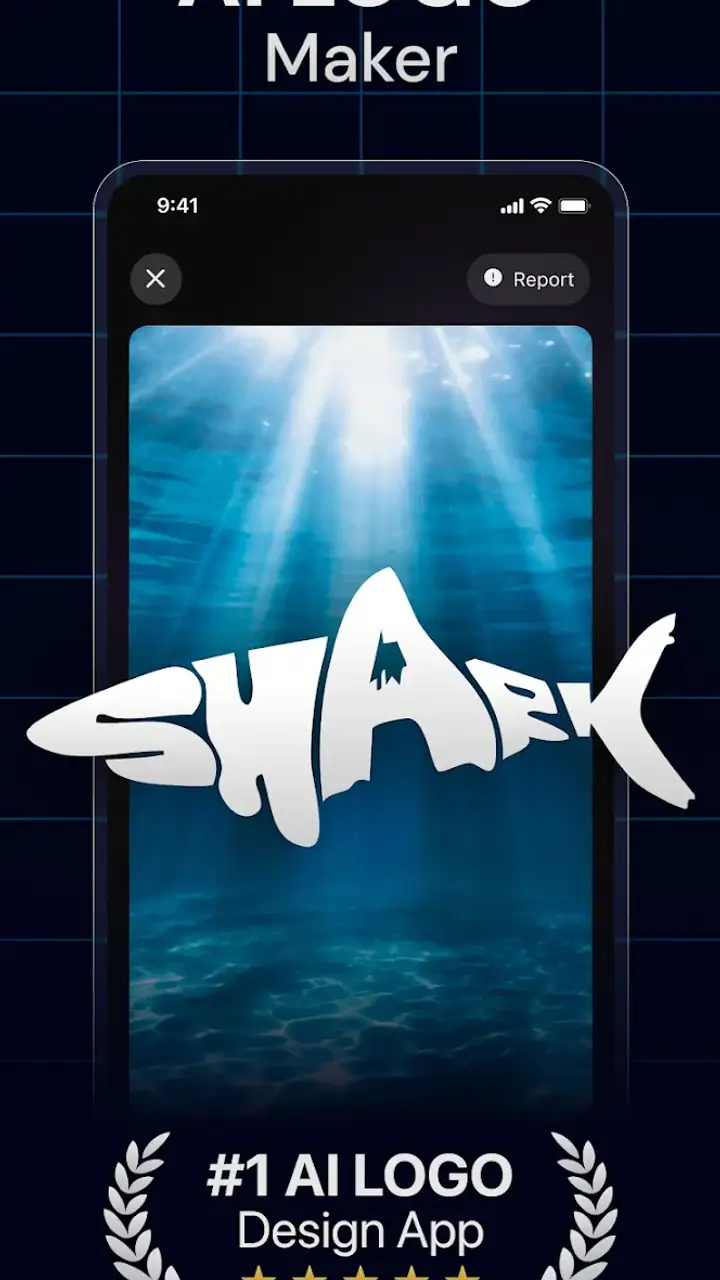
Turning generated ideas into a useful shortlist
The most important judgment happens after generation. I do not ask only whether a logo looks attractive. I check whether I can recognize it after looking away, whether the main shape survives at small size, and whether the lettering remains readable without zooming. These tests are more useful than choosing the design with the most decorative detail.
I also compare concepts in black and white whenever possible. Color can hide weak structure, while a strong silhouette often remains understandable without it. This is a particularly useful trade-off for someone who may later print a document, stamp packaging, or use the mark in a place where full color is unavailable. A design that depends entirely on gradients or fine effects may create extra work later.
Another non-obvious tip is to judge the logo beside the actual name of the project, not in isolation. Some symbols compete with their wordmark, while others disappear beside it. If the app lets me explore variations, I use the name as the anchor and treat the icon as support. That approach produces a more usable result than selecting the most dramatic standalone image.
Where the novelty begins to fade
After the initial excitement, the experience becomes less about discovery and more about editing decisions. The first few rounds feel fresh because every result opens a new possibility. Repeating the same process without a clear question eventually produces visual noise: similar shapes, familiar typography, and small changes that are difficult to compare. This is where a casual user may mistake more options for better progress.
I avoid that fatigue by giving each session a narrow goal. One session might focus on a friendly look, another on a more professional direction, and a later one on whether the selected mark works in a square profile image. Separating those questions keeps the app from becoming a scrolling exercise. It also makes it easier to explain why one design won, which matters if another person is involved in the decision.
There is a difference between an app that helps me make a decision and one that keeps me entertained. Rebrand is most valuable in the first role. If I already have a firm visual identity, an established logo, or a designer who has translated the brand into a complete system, repeated experimentation may add little. In that situation, the app is more likely to distract from the work than improve it.
Does it earn a place month after month?
For me, the answer depends on whether the project regularly needs new visual starting points. A person launching several small ventures, testing product ideas, or creating social content may return to an AI logo maker because the need keeps changing. Someone who needs one logo for a single project may use it intensely for a short period and then have no reason to open it again.
The app has a current version of 1.4.0, and its average rating is 3.9 from around 9,200 ratings, with 179 written reviews. Those figures suggest a mixed but meaningful public response rather than universal approval. I read that as a reminder to assess the workflow personally: the app can be useful while still frustrating users who expect professional-level control or a fully finished brand package.
Its listed install base is over 100,000, which gives the product a level of visibility beyond a purely experimental tool. Still, popularity does not answer the long-term question. Lasting value comes from how often I have a genuine design problem to solve. If I only need a one-time concept, the app’s recurring appeal will naturally be limited. If I maintain several identities, it can remain a convenient idea generator.
One practical month-to-month use is seasonal refresh work. A small creator might keep the primary logo stable while exploring a temporary campaign mark, a product badge, or a variation for a new audience. I would use Rebrand for the exploration stage, then check every variation against the original identity. The danger is allowing each new experiment to become a separate style until the business no longer looks consistent.
That is why I see the app as a companion to a brand system, not a replacement for one. I would keep a simple record outside the app of the chosen colors, preferred lettering, spacing, and approved versions. Even if the app helps create the starting point, this record protects the identity when the tool is not open or when another person needs to use the logo.
The maintenance work people tend to overlook
Making a logo is only the beginning. The maintenance burden appears when the mark has to travel across different contexts. I check it as a profile image, beside text, against a light background, against a dark background, and at a small display size. I also keep the original selected version separate from experimental alternatives so that I do not accidentally use an unfinished variation later.
This workflow matters because AI-generated design encourages quick selection, while real branding rewards consistency. A logo that looks excellent in the app may still need careful handling in a document or social post. I would not assume that one generated image automatically supplies every format, layout, or usage version required by a growing business. For a serious launch, I would verify the final output and prepare practical copies before publishing widely.
There is also a maintenance cost in decision-making. If I return after several weeks, I may not remember why a particular concept was chosen. Saving a short note about the intended personality and audience prevents a later redesign from being based only on current taste. This is one of the best ways to stop a useful tool from turning branding into an endless cycle of redecoration.
The in-app purchase range is another reason I would plan before committing. Since individual items can cost from $6.99 to $59.99, I would first decide what I need from the final design and whether the result is strong enough to justify paying for it. I would not purchase multiple near-identical concepts simply because the app makes comparison enjoyable. A clear brief and a shortlist reduce that risk.
Who will feel the most fatigue?
The main source of fatigue is not the act of generating ideas; it is evaluating them without firm criteria. When every option is slightly different, I can spend more time comparing than designing. The second source is the gap between a visually polished concept and a complete brand solution. Users expecting detailed control, carefully managed typography, or a broad production workflow may find the app too lightweight.
I would also skip it as my primary tool if I need a distinctive identity built around deep research or a highly specific cultural reference. AI can suggest a direction, but a human designer is better placed to investigate context, ask difficult questions, and develop a system that remains meaningful across years. Rebrand is not a substitute for that kind of collaboration.
It is less suitable as well for people who dislike subscription-style or item-based decisions and want every professional export or refinement included from the start. The free download makes testing accessible, but the purchase structure means I would inspect the exact value of each upgrade before treating the app as a long-term workspace.
Compared with manually drawing in a general illustration app, Rebrand is faster at producing a first direction and less demanding for beginners. Compared with a template library, its appeal is the possibility of creating something that feels more tailored to the project rather than selecting a prebuilt arrangement. Compared with hiring a designer, it is cheaper to explore, but it does not provide the same strategic questioning, originality control, or dependable brand system.
That comparison clarifies the right role. I would choose Rebrand when speed and exploration matter more than exhaustive control. I would choose a general design editor when I already know the exact composition and need precise adjustments. I would choose a professional designer when the logo carries serious commercial weight, must work across many applications, or needs to express a carefully researched position.
My long-term verdict
Rebrand - AI Logo Maker earns lasting space as an occasional creative utility, not as an app I would keep open every day. Its first-week appeal is real: it makes logo exploration less intimidating, gives a small project momentum, and helps me compare directions before investing in a more involved process. The free starting point and broad Everyone rating make it easy to approach, while HubX has kept the product focused on a clear Art & Design task.
Its month-to-month value is strongest for people with recurring identity work. If I manage several small projects, refresh campaign visuals, or frequently test new ideas, I can imagine returning to it with a specific brief. If I need one stable logo and already know what it should look like, the novelty will probably disappear quickly.
I recommend using it with discipline: define the brief first, shortlist rather than endlessly browse, test small-size readability, compare in black and white, and keep a separate record of the final identity. Those steps turn a quick AI experiment into a more dependable design decision. They also reduce the maintenance burden that appears once the logo leaves the app.
My final recommendation is therefore conditional but positive. Try it if you want fast concepts, have a modest design budget, or need help getting past the blank page. Skip it as your only branding solution if your identity needs deep strategy, precise production control, or a complete set of professional assets. The app is good at opening the conversation about a logo; the lasting value comes from the judgment and consistency I apply after that conversation ends.
FAQs for Rebrand - AI Logo Maker
What is Rebrand - AI Logo Maker, and how does it work?
Rebrand - AI Logo Maker is a branding application designed to help users create logo concepts with artificial intelligence. You typically enter a business name, choose an industry or visual style, and select preferences such as colors, fonts, and symbols. The app then generates logo ideas that can be customized. It is intended for quick branding projects rather than replacing a professional designer in every situation.
Can I use the logos created with Rebrand for commercial purposes?
Commercial usage depends on the app’s current licensing terms and the specific assets used in your design. Before publishing a logo on packaging, websites, social media, or merchandise, review the license information provided inside the app or during export. AI-generated designs may also resemble existing trademarks, so users should check originality and trademark availability before adopting a logo as an official brand identity.
Does Rebrand - AI Logo Maker require an internet connection?
Most AI logo-generation features generally require an internet connection because the design processing may take place on remote servers. You may be able to edit or view previously saved projects offline, but generation, cloud synchronization, premium asset loading, and exporting could be limited without connectivity. For the smoothest experience, use a stable Wi-Fi or mobile data connection when creating and downloading logo designs.
Is Rebrand - AI Logo Maker free to download and use?
The application may be available to download at no initial cost, but some features can be restricted behind in-app purchases or a subscription. Premium templates, higher-resolution exports, background removal, brand kits, or commercial-use options may require payment. Check the store listing and the in-app pricing screen carefully, including trial duration, renewal terms, and cancellation instructions, before confirming any subscription.
What should I know about privacy and ownership when using the app?
When using Rebrand - AI Logo Maker, you may provide business names, design instructions, uploaded images, or other branding information. Review the app’s privacy policy to understand how this content is stored, processed, and shared. You should also confirm whether you retain rights to uploaded material and exported designs. Avoid submitting confidential business information unless the app’s data practices meet your requirements.
Pros
- Generates multiple logo concepts quickly from simple text prompts.
- Useful for testing brand ideas before hiring a professional designer.
- Offers templates suited to different industries and visual styles.
- Exports can save time when creating basic social media branding.
- Beginner-friendly interface requires little design experience.
Cons
- AI results may look generic or resemble existing logo styles.
- Fine control over individual design elements can be limited.
- Some high-resolution exports or assets may require payment.
- Text rendering in generated logos can occasionally be inaccurate.
- Brand consistency across multiple materials may need manual editing.


